What Pegman Saw: A Second Opinion

Kumiko Guest House, Varanasi | Martin Yao, Google Maps

“They say he is the best astrologer in all of Varanasi. In all of India, perhaps.”

The politician let out an exasperated breath and stared up the long flight of stairs. The astrologer’s office waited at the top. “But is he better?” he growled. “Better than all the rest?”

They both knew what the other astrologers were saying: that the only thing certain in the upcoming elections was change.

“You can always choose to ignore them, Narendra. Many of the youth say it’s time to leave the old ways behind. Chart our own course.”

“Nonsense.” He’d relied on astrologers in developing policy decisions from terrorism to Pakistan. The fact that he’d aspired to office at all was due to chance reading as a boy. He grumbled, leaning on his cane as he and started up the stairs. “I just need an astrologer to give me better news.”

147 words

This has been an edition of What Pegman Saw. To read more stories inspired by the prompt, click here.

Inspired by: Varanasi astrologers predict instability in politics and this awesome photograph I uncovered at OldIndianphotos.in.
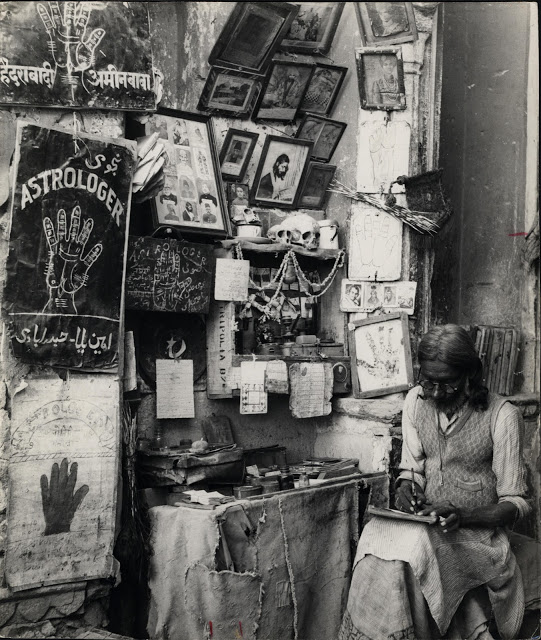
Source: University of Hawaii at Manoa Library, OldIndianPhotos.in

You May Choose

Selma, Alabama | Google Maps

You may choose
To sleep in on a Tuesday
Roll late out of bed when you hear your sister call,
saying what you doing girl—don’t you know what’s on about?
you may never get to say no
you may have yourself a daddy-man
you may be sick, you may be poor
you may have nothing left to give, and still you have to give it all
it ain’t up to you.
Only thing you got, Child
is one day to use your voice
better use it while you can.
Raise your voice.
Catch a ride uptown
or even take the bus
or walk it, if you must,
even barefoot and pregnant, with a child on each arm.
Send them to wait in the vestibule
while you do it.
Then you go inside
sign your name and show your picture
and walk into the voting both where
You. May. Choose.

150 words

This has been an edition of What Pegman Saw. To read more stories inspired by the prompt, click here.

As of today’s writing, women in Alabama can still vote.

What Pegman Saw: The Teacher

Chute Sacree Trail | Souvaroff Eric, Google Maps

Dadabe was the wisest man in all of Madagascar. He could scent the wind and know the weather ten days out. He once brewed a tea from a pink-petaled plant that cured Samoely of fever.

He was a farmer all his life, baring the rich soil nourished by rainforest to grow his crops. He stood proud at the riverbank waving as I left for camp.

The camp was Madagasikara Voakajy. I alone was picked from my village to go. At the camp, I met other kids from up and down the highlands.

“Today, we will talk about sustainability,” they said.

We all loved our forest—it was not a thing they needed to teach. What we didn’t know was that the practices taught by our elders were destroying it. With our new wisdom, we could cultivate the land for generations to come.

When I saw Dadabe, I would teach him.

150 words

This has been an edition of What Pegman Saw. To read more stories inspired by the prompt, click here.

For generations, Malagasy farmers have relied on a system of slash and burn, using the ash to fertilize their crops. The practice gnaws away at hundreds of acres of precious rain forest every year. Madagascar’s deforestation rate is the highest in the world.

These same people rely on the forest for fresh water and medicine. Madagasikara Voakajy is an environmental organization training Malagasy youth in sustainable farming practices. The kids learn skills like making compost and crop rotation. These techniques enable them to farm the same plot year after year instead of razing more forest. Adults, excited by the high yields, often approach the kids for guidance.

To learn more about Madagasikara Voakajy, see these resources:

What Pegman Saw: The Pittsburgh Promise

Pittsburgh Perry High School, I think | Google Maps

Pittsburgh Perry High School, I think | Google Maps

“Don’t be hanging with no corner boys,” she’d say.

DeAndre could still hear the growl of his grandmother’s voice while he waited backstage for his name to be called.

There would be no one in his family to hear his name called today; no one to see him stride across the stage in the graduation gown, no one to run a finger on the raised text of the valedictorian medal. His grandma passed away last October. His dad was still in Joliet, and his mother—well, who knew where she was. But somehow, he felt his grandma with him.

He would be the first member of his family to go to college, he realized as he walked tall across the stage to collect his diploma. And, as he tossed the cap into the air after the ceremony, he made a wish, a promise, a vow:

He would not be the last.

151 words

This has been an edition of What Pegman Saw. To read more stories inspired by the prompt or to submit your own, click here.

As college grows ever more out of reach for working families, it has long been inaccessible for those hoping to raise themselves from poverty. Scholarships like The Pittsburgh Promise aim to change that by funding the college education of urban Pittsburgh youth. Even though such scholarships don’t make it easy, they make it a little bit more possible.

What Pegman Saw: Honor

“I am a man of honor,” her father said.

“So we have your word?” the officer asked.

Diana waited breathlessly in the back of the squad car. Could it be true? Had the families agreed to let her marry? It had been wrong to try to elope, but there had seemed no way to secure consent between the families. Harsh words were spoken. Threats were made. By the time the police had drafted the agreement to secure Diana’s safety, gunshots had rung out at her beloved’s house.

Her father extended a hand to the policeman. “We have all agreed. The marriage can take place.” At that, his eyes slid to her.

Could she trust him?

It was a hope so sweet it was worth believing. Because if there wasn’t love, there wasn’t hope. And if there wasn’t hope, life wasn’t worth living.

He was a man of honor, after all.

150 words

This has been an edition of What Pegman Saw. To read more stories inspired by the prompt, click here.

This story was inspired by a real-life Romeo and Juliet tale out of Lod that is every bit as tragic as Shakespeare’s take on forbidden love:

18-year-old Israeli Arab Woman Shot Dead While Shopping for Her Wedding

The UN estimates that around 5,000 women and girls are murdered each year in so-called “honor killings” by members of their families.

The Ayahusaca

Huayna Picchu | Google Maps

“Oh my god, stop it.”

Josh dropped the chalk and lolled on his back, grinning up at the sun. A stream of drool ran from one corner of his mouth. His chest heaved. The Ayahusaca was a bad idea. Since the tea ceremony, he’d been wallowing over the Incan ruins and blathering about the god-Inca-love-connection that ‘binds us all.’

I walked to where he’d scrawled my name on a granite outcrop downhill from the Incan temple where he’d stripped down to his underwear. The graffiti would probably wash off in the next rainstorm. His sunburn was another matter.

“Honey, you’re getting red. At least put on some sunscreen.”

He jolted up from the slab. “My heart.”

My chest tightened. “You’re not having a heart attack, are you?”

He fumbled for the dropped chalk and turned around to scrawl a heart in the space below my name. “I forgot my heart.”

150 words

Sorry Josh, I couldn’t resist.

This has been an edition of What Pegman Saw. To read more stories inspired by the prompt, click here.

Ayahusaca is an hallucinogenic drink used in spiritual ceremonies by indigenous people in Peru. As of late, it has become a bit of a tourist industry. Foreigners pay big money to go on Ayahusaca retreats and experience the enlightenment it promises.

We Portlanders

Somewhere in Portland, Oregon | Scooter Mc Quades
Who’s Got Game? Google Maps

At first it was some sort of a joke, like ‘Florida Man’, except it was us…we, Portlanders.

Portlanders ban single use plastic bags.

The news hawks swept in, made us seem like clog-wearing hippies wearing tie-dye tees.

Portlanders vote yes to zero landfill.

Suit-clad newscasters smirked and showed footage of beard-sporting hipsters sipping organic free-trade. “That’ll never last,” they said.

Portlanders go zero emission.

The pundits waved their hands, said it wasn’t practical. They said since legalizing weed, we Portlanders had abandoned all reason.

When our Oregon senator brought the Portland Bill, which banned lobbyists from making campaign donations and completely rewrote campaign finance law, the senate floor erupted. “There’s no way,” they said. But maybe they were more worried about reelection without their coal lobby and billionaire funds.

Portlanders lead the country into renewable energy.

They called it a joke, a trope, a cliché, but we did it—we: Portlanders.

150 words

This has been an edition of What Pegman Saw. To read more stories inspired by the prompt, click here.

Apologies for not participating the past few weeks. I have been studying for a certification exam (which I passed!).

I love Portland, but when I picked it for a location for Pegman this week, I never imagined I’d have such a hard time of it. Some of my favorite things are associated with Portland… forests, ferns, moss, coffee…Lewis & Clark, bigfoot, and of course my husband J. Hardy Carroll. But when I saw this picture with the Subaru outside, I got hung up on the cliche of Portland.

Anyone who knows Portland or has watched Portlandia knows what I’m talking about. For some reason this glitch got me thinking about the legend that is Florida Man–and this story was born. Call it sci-fi-satire-cliche, I guess. But with a happy ending, because the world is saved!

Have a most wonderful week & thanks for reading.

Karen

The End of the World

Cape Horn | Michael Slough, Google Maps

“It’s not the end of the world, Jenna. We can keep trying.”

“We shouldn’t have come.”

Patagonia was supposed to be our last adventure before becoming parents. Instead, it had been a crushing end to a cherished expectation.

“It’ll be okay.” I reached for her hand. There was no point in reminding her what the doctor in Santiago had said—that it happened in one in four pregnancies. That we were young. That we could try again. No—it wasn’t the end of the world, but we could see it from here. She knew what the doctor in Santiago hadn’t: that it ran in the family.

On the horizon, the ghosts of islands slumbered in the fog. It wasn’t ours to know the shape of our future. But just as I knew the color of her eyes and the shape of her hips, I knew somewhere in our future, a child waited.

152 words

This has been an edition of What Pegman Saw. To read more stories inspired by the prompt, click here.

Thjodhild the Opinionated

Greenland | Google Maps

People believe all sorts of things that aren’t true. Like “Red”. Weren’t for his beard, I’ll tell you that.

Us, banished. Again. He didn’t want to tell me, either. That’s where the red came from. Him standing on the other side of the hide-door, shifting from foot to foot. “Thjodhild. I’ve got some bad news.”

“You can’t be murdering the neighbors. Have you murdered the neighbors again?”

Ever tried to cross the North Atlantic in a longship in September?

Not that I agree with the sentence, mind you. Fellow he killed was Eyiolf the Foul. Seems like he was doing the town a favor.

Anyway, Erik wanted to call it “Exileland”. Seriously. Hoping to build a colony in a brave new land by calling it a land of exiles. He never had no sense.

“What should we call it then, to bring back settlers?”

“Erik—you’re calling it Greenland.”

149 words

This has been an edition of What Pegman Saw. To read more stories inspired by the prompt, click here.

I couldn’t help having a little fun with the legend of Erik the Red by making his wife larger than life. Who knows what the real Thjodhild had to put up with, but I like thinking Erik wasn’t and Leif weren’t the only badasses of the family.

The Horse Thief’s Daughter

Victoria Dock, Caernafon, Wales | Pete Edwards 360uk , Google Maps

Today, a preamble rather than a postscript on my story:

When I see places as lovely as Portmeirion Village, Wales, I wonder what possessed my ancestors to leave such a lovely country. And then I remember there was probably some misbegotten criminal matter or some unseemly circumstance behind it. Which is how this story happened.

My grandma liked to say that the riderless horse on the family crest was because we were horse thieves from way back. And then there’s the matter of the childless fifty-something couple in Nebraska that suddenly gave birth to my great grandmother. Yes, there are all sorts of interesting things in history, I imagine.

The steward eyed her midsection as she boarded. “Yer husband be waiting in America?”

“Yessir.”

There was no husband. There was only a charming rogue and a fortnight of promises. Her hand curled to the growing curve of her belly.

“Yer name?”

“Eliza.”

“Eliza what?”

She cleared her throat. Giving her surname—even in this port—was risky. Her people were vagabonds and miscreants. It was no wonder she’d taken a bad path.

She would make it in America, though. She couldn’t heft a pickaxe, but where there were miners, there were hungry men who’d pay a shilling for a hearty cawl and brown bread. She’d take care of the young one now slumbering in her belly. Raise him as a widow and turn her life around.

Her eyes shifted to the barrels on the deck. She couldn’t read, but she knew the sounds of some letters. “Rawson,” she guessed.

150 words

This has been an edition of What Pegman Saw. To read more stories inspired by the prompt, click here.