World-changers Needed for One-day Assignment

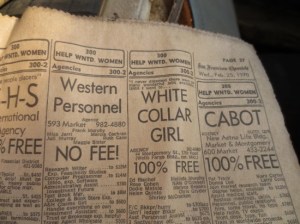
Old newspaper with classified ads showing jobs for womenHELP WANTED – WOMEN

World changers needed for one-day assignment.

CHANGE THE COURSE OF HISTORY.

Are you a US Citizen who wants to make the world better? This one-day job assignment takes place on November 6, 2018.

March to your local polling place and VOTE. Position is unpaid, but the rewards will benefit you and future generations.

Note: Recurring duties possible as future elections occur in your area.


You’re probably too young to remember when classified ads made a clear distinction between what was “women’s work” and which jobs were for men. The practice was outlawed in 1975. That legislation was but one tick in the timeline of women’s march to equality.

The Long March
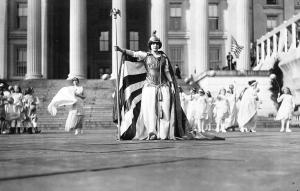
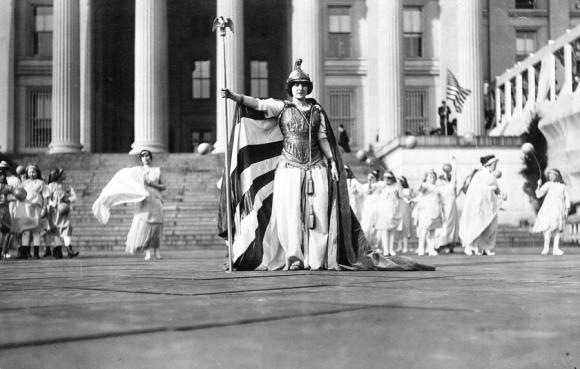
Regal woman in gladiatrix dress leading a women's marchThe 19th amendment granted women the right to vote on August 18, 1920. On November 2 of that year, more than 8 million women voted for the first time.

It was a long battle from the start of the women’s movement in 1848 and the ratification of the 19th amendment on August 18, 1920. The battle even turned violent from time to time–most notably on the eve of Woodrow Wilson’s inauguration in 1912.
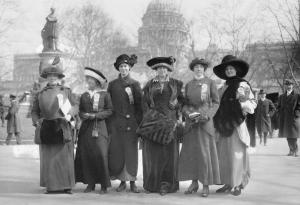
Suffragettes in 1910's dresses and hatsEight thousand women gathered for a suffrage parade in the nation’s capital. Dignified and determined, the procession was led by lawyer Inez Milholland, astride her horse, Gray Dawn. Women from all walks of life came to participate. The long-activist suffragist “Pioneers” led the charge. They were followed by working women in uniform: nurses, farmers, homemakers, doctors, pharmacists, actresses, librarians, and college women in academic gowns. The women wore sashes proclaiming “Votes for Women” and pinned jaunty gardenias to their lapels.
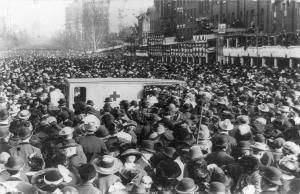
Crowd of spectators blocking the ambulance at 1912 women's marchAs they marched, men ridiculed from the sidelines. Up to 10,000 people came to watch. Many were drunk, crowding the procession. Women were grabbed, tripped, and assaulted. The injured languished, waiting for ambulances which had been blocked by the unruly spectators. Policemen stood by, indifferent to the violence.

“There would be nothing like this happen if you would stay at home,” said one cop to an injured woman. Over 300 women were injured and 100 hospitalized by the time the day was over.

One Hundred Years Later

Bunch of grinning male politicians

White guys congratulate themselves on making birth control access more difficult for 62 million women.

More than one hundred years later, the battle still goes on. The Equal Rights Amendment proposed in 1972 never passed. It died in 1982, falling short of enough states to ratify it.

The Paycheck Fairness Act (and similar legislation) which would guarantee women equal pay for equal work continues to be filibustered in Congress.

It was only last year when thirteen men sat down to decide women’s health care issues, like whether insurers should have to cover pesky things like mammograms, birth control, or maternity care. They wound up cutting Medicaid, which covers half of all US births and went on to gut access to birth control for 62 million women.

The More Things Change

It wasn’t until the 1900s that women across the United States could own property, take out patents, and keep their own wages.

As recently as the 1970s, a woman could not get a credit card, could not refuse sex with her spouse, nor could she report sexual harassment in the workplace. Landlords could refuse to rent to women, bosses could refuse to hire pregnant women, and judges could refuse to allow women on their juries.

As recently as 1988, women couldn’t obtain a small business loan without a male cosigner. One borrower had to resort to having her minor son co-sign for her before the bank would grant the loan.

Crazy laws still exist on the books. In Florida, an unmarried woman can’t parachute on a Sunday. In Michigan, a woman must provide permission to cut her hair, and in Waynesboro, Virginia, it’s against the law for a woman to drive a car on main street unless her husband is walking in front of the car waving a red flag.

And, on a more serious note, it’s a woman’s prerogative to change her mind–except in North Carolina, where she cannot rescind consent and call it rape, even if an encounter becomes uncomfortable, painful, or violent. And in seven US states, rapists have parental rights.

Supreme court justice Brett Kavanaugh

Supreme Court Justice Brett Kavanaugh

The takeaway from all this is that the fight for equality is far from over. Some days it seems like women’s rights are eroding as fast a shoreline in hurricane season.

The 1994 Violence Against Women Act allowed women to seek civil rights remedies for gender-related crimes. But in 2000, the Supreme Court invalidated those portions of the law permitting victims of rape, domestic violence, etc. to sue their attackers in federal court.

What gems the current Supreme Court has for us, we can only imagine.

Get Thee To A Polling Place

Embed from Getty Images

Maybe you’ve made up your mind and have inspiring candidates to vote for. Or maybe you’re only voting against beef-witted louts like North Carolina congressional candidate Mark Harris, who believes it is a wife’s duty to submit to her husband.

Look, I get it. Sometimes when you look at your options, it seems like a case of the ‘lesser of two evils,’ which is never an exciting reason to march to the polls. Politics is a greasy-gross-cesspool of greed and corruption, and that’s on a good day.

Campaign finance laws enable special interests to steer legislation. The two-party system thrives on divisiveness and pits us against one another to promote their high donor agendas.

The thing is, it’s not going to change–not without people like you. Today there is one tangible step you can take to make a difference:

VOTE.
Wondering who’s on the ballot and where they stand on the issues? Learn more at:

Liquid Courage

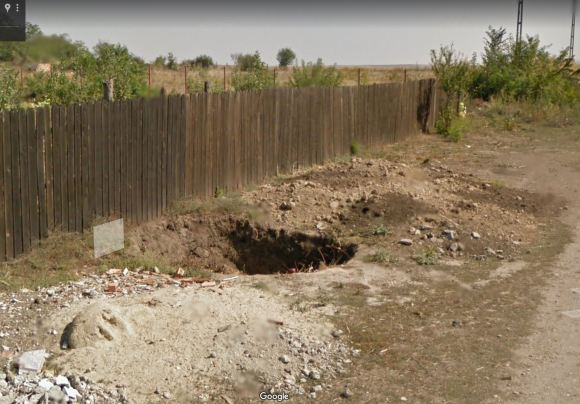
Satu Nou, Olt County, Romania | Google Maps

It took a hero.

That was the thing outsiders never understood. That, and how the dead would rise from their graves to feed upon their relatives. This was true thing. It was only a matter of time before his brother-in-law’s animated corpse fed upon his children again.

Gheorghe tipped the bottle and took another deep pull of the ţuică. He looked up at the Moon. It would take courage to see his dead uncle’s face, to drive the sickle into his heart, to burn his corpse and make the tea from his rotting Heart. He swayed against his shovel at the thought and took another swill.

When he woke up, the moon was replaced by the amber skies of dawn. He slapped a hand to his neck, feeling for a wound. Had the dead been at him? He sat up, annoyed with himself. He had to do this. Perhaps tomorrow.

150 words

This has been an edition of What Pegman Saw. To read more stories inspired by the prompt or to submit your own, click here.

I apologize for my absence as of late. I’ve been battling insomnia. But, I got nine hours last night and feel like a new person. Or at least like an old person who has gotten nine hours of sleep.

This story was inspired by this well-written and worth-reading piece: Romanian villagers decry police investigation into vampire slaying. If you read it, you’ll see my story isn’t fiction at all.

After reading it, I plopped my Pegman down on the map in the general location described by the article and was stunned to find myself right in front of a freshly dug pit. There are more up and down the length of this street. I’m sure there’s an explanation…right?


And Thus, the Oporto Was Lost

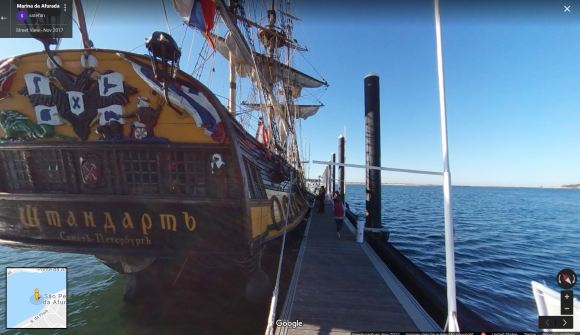
Marina da Afurada, Porto, Portugal | © sstefan, Google Maps

All superstitions had been observed for the journey, even the ‘spilling of blood’, which conveniently occurred on its own when the bosun and cooper came to blows over the affections of a blue-eyed whore at a brothel in Matosinos.

A plump gray kitten was secured to bring the journey luck. The quartermaster even purchased a caul from a local midwife. They’d waited to set sail until the first day free of rolling clouds and red dawns. They’d even brought a priest to accompany them on the journey.

Portuguese sailors were notoriously uneasy about weather, and the winds blew ill in the North Sea even in the best of times. Thus, they were reassured by the priest’s presence and the promise of daily mass.

But when the storm came, the fools ran to the quarterdeck for a holy water blessing instead of manning the sails. And thus, the Oporto was lost.

150 words

This has been an edition of What Pegman Saw. To read more stories inspired by the prompt or to submit your own, click here.

The End of Mother Goddess

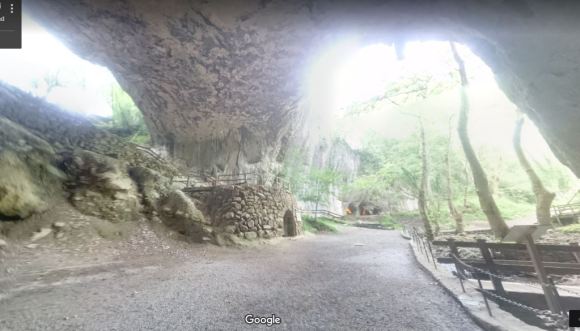
Cuevas de Zugarramurdi |  © Ernesto Vizcaino Abad, Google Maps

“Explain yourself,” the Inquisitor-General said. As he paced, his long cape billowed behind him. The woman rambled on, the sounds of her language a puzzle to his ears.

When she finished, the Basque translator turned. “She says they have done nothing wrong. That it is just—how you say—a ‘woman’s meeting.’”

The man snorted. “What nonsense is that? What good can come of a ‘meeting of women?’”

The translator turned, a tangled string of sounds issuing from his lips as he asked her. She answered.

“She says it is there they pass down the ancient wisdom. That they teach how to prepare the leaves that ‘bring the moon’, and what herbs will cure cangrejo. These cures render prayer unnecessary. She says this is sacred wisdom, passed mother to daughter, since the time of Mother Goddess.”

The Inspector-General walked closer, nodding. The woman dipped her head.

“Now we’re getting somewhere.”

149 words

This has been an edition of What Pegman Saw. To read more stories inspired by the prompt or to submit your own, click here.

Sorry I’m so late this week. I wrote a story I didn’t like, and wanted to do another one. I then promptly fell into a rabbit hole of fascinating research about the Basque Witch Trials that had me wishing I had more time to know this topic. As it is, this is 90% made up…

Or is it?

Looking forward to everyone’s stories this week!

Karen

We Three Girls

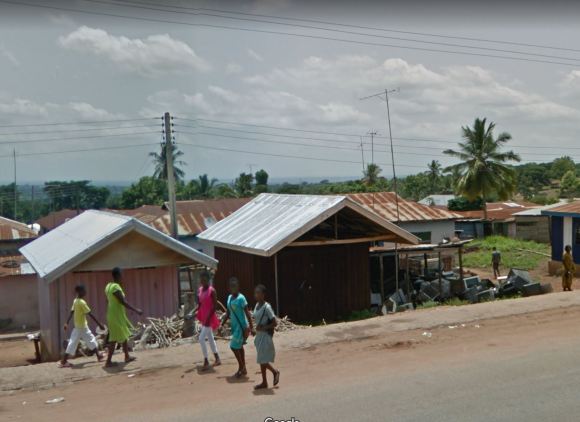
Ghana | Google Maps

Back when we was just girls, we three, we’d walk back on Sundays, red dust kicking up on church shoes, Mawusi always in the blue dress—and we’d share her an ear of tender corn, or some days two fists of banku, and we’d walk slow so she had time to eat it, talkin’ bout things the preacher said, and which we thought was sinning most—them sneaking in late to the back row still smelling like Saturday rum—us making Mawusi laugh teasing her ‘bout Teon who said he’d marry her someday. But he didn’t have a slant roof over his fool head, and no prospects beyond a strong arm. The only thing that boy was rich in was love for poor Mawusi, her with the hungry ma and the seven sisters, their eyes as big as empty plates.

Don’t know why she had to go and marry Big Aagha.

151 words

This has been an edition of What Pegman Saw. To read more stories inspired by the prompt or to submit your own, click here.

What Pegman Saw: What Love is Like

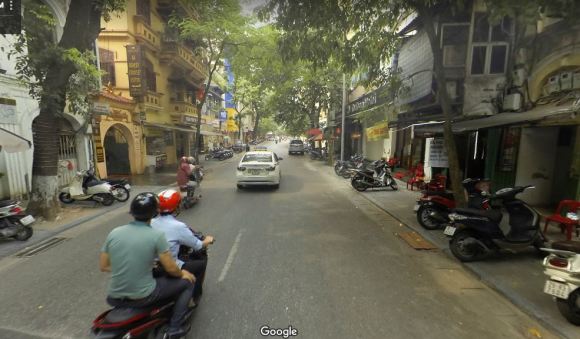
Hanoi, Vietnam | © Wonov.com, Google Maps

“Hey,” he said.

He. Said. Hey.

Then—and again just now. A husky-voiced hey as warm as a caress. Like he’d been waiting for me to turn around—his lush lips curved on the word. And it felt like a fast turn on the back of a motorcycle. My skin was buzzing and my heart was cartwheeling and every single cell of my being went to riot or revolution.

It’s true I got the flu later. My mom likes to point that out. “That wasn’t love,” she laughs. “That was the flu.”

But it happened back then and it was happening now, and it happened every single time I looked at him: that feeling of a fast ride on a steep curve. And I never got the flu again—it was just that one time. That was not the flu. It was love.

140 words

Totally cheated this week. This is not related to the location but rather what the photo made me think of.  When I thought about this picture, all I could think about was what it feels like to ride on the back of a motorcycle–a subject I once wrote about–and so I lifted this excerpt from a finished work I did.

This has been an edition of What Pegman Saw. To read more stories inspired by the prompt or to submit your own, click here.

What Pegman Saw: The Wedding Party

Grand Hotel, Mackinaw Island, U.P., Michigan | © Luna Tech, Google Maps


“Was it something I said?” Chloe said, eyes wide.

He sighed and shook his head. His mother was always making a scene. It was always her with the shrill scream in the fine restaurant; her with the foot stomp in the jewelry store. And just now—her flinging the croquet mallets across the lawn over a little change in dinner plans.

“It’s okay. I’m sure she’ll be fine,” he said.

“We can do the rehearsal dinner earlier. It’s no big deal.”

“Nonsense, darling. What’s a rehearsal dinner without the bride’s parents?” he wrapped an arm around Chloe’s shoulder and kissed her.

She frowned in the direction of the hotel. “I’m sorry my parents couldn’t come earlier. With Ben in intensive care, they couldn’t—”

“Look at me.”

Chloe turned.

He brushed her hair back and kissed her brow. “Listen to me. It’s time for my mother to grow up.”

150 words

This has been an edition of What Pegman Saw. To read more stories inspired by the prompt or to submit your own, click here.

What Pegman Saw: Qausuittuq

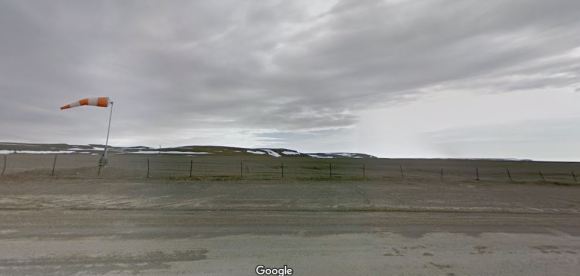
Resolute, NU, Canada | © Google Maps

The boy shivered against him. He wrapped one sealskin clad arm around him and pulled him closer.

In the orbit of candlelight opposite, Aput glared, her eyes as dark as the perpetual night.

There was no point in arguing with her again. A hungry wife was an angry wife. However, it wasn’t as if they’d had a choice. And the government man had promised good hunting, in a land free of white ways. He said they could return to tribal life.

But here in Resolute, game was sparse. And who could hunt in this endless night? He peered up at the stars, winking through the vent of the igloo.

“We should leave,” she said.

He forced a smile. “It will get better. Tomorrow will be better.”

She snorted, her eyes narrowing. “How will we know when it’s tomorrow? In a place with no dawn, tomorrow never comes.”

148 words

This has been an edition of What Pegman Saw. To read more stories inspired by the prompt, or to submit your own, click here.

Qausuittuq is the Inuit word for “place with no dawn”. You can read more about the High Arctic Relocation on which this story is based on Wikipedia.

I Will Be Remembered Forever

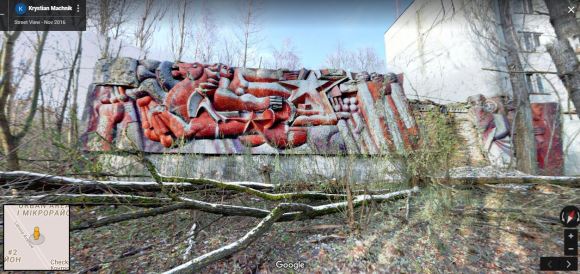
Pripyat, Ukraine | © Krystian Machnik, Google Maps

“I got it,” he said.

She hurried back to the kitchen. He sat at the table, the paper trembling in his broad hands. He held it out like precious parchment and not the government-issue letterstock it was. She took it, eyes stitching the length of the letter. “Where will it be?”

“Across from the market. Between Residence Ten and Twelve. Everyone will see it when they go to market. Everyone.”

She sat down, letting the letter rest on the table. “Have you decided what it will be?”

He stared past the bare light fixture, far beyond the cracked ceiling, his chiseled jaw proud. “It must be something grand, of course. Something inspiring. It must memorialize our great men. Our noble history. Oh Oksana—everyone will see this work. I will be remembered forever.”

She leaned forward, her small hand shelled over his, her eyes tender. “You will, solnishko. You will.”

150 words

This has been an edition of What Pegman Saw. To read more stories inspired by the prompt, click here.

This week’s location (Chernobyl) was especially fascinating to me. I could easily lose a morning, a day, or even a weekend, just wandering the streets. There’s something about urban decay that really makes me think about the transient nature of art, and life, and well… everything.

The Secret Silk Dress

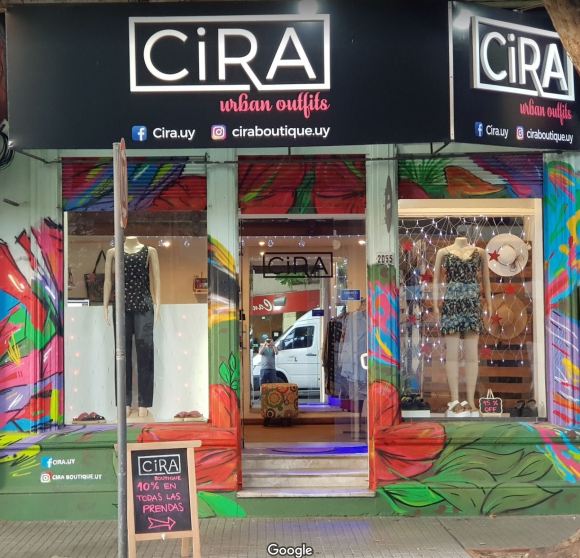
Cira Boutique | Google Maps

“What is this?”

Mama held the dress high, pinched between her thumb and forefinger.

I’d found it at Cira; used the money from six months of chores to pay for it. A dress, to tuck in a drawer—to only pull out when I was alone—to imagine who I could have been. Who I should have been, but wasn’t. A secret so unutterable I’d never said it, not even to myself. My mouth fell open, helpless to answer her.

Her dark eyes flashed. Her look said she knew—that maybe she’d always known, but she needed me to say it. When I didn’t, she draped the dress, fold on fold onto her lap. The fingers of one hand caressed the silk. “A beautiful dress. For a beautiful girl,” she said.

I was neither. I stared at my lap.

“Child, when I said you could be anything, I meant it.”

This has been an edition of What Pegman Saw. To read more stories inspired by the prompt, click here.

This story was inspired by reading about Michelle Suárez Bértora.